Cairns Concrete Cutting Contractors
Call (07) 4043 7499Concrete Cutting in Cairns
Precise concrete cutting in Cairns lets you make openings, remove sections and install services without damaging the rest of your structure. We cut slabs, walls, driveways and floors for doorways, windows, drainage, plumbing, electrical work and expansion joints. Using professional saws, we achieve straight, clean cuts through reinforced concrete of different thicknesses, saving time and reducing mess compared with demolition methods. Every cut is measured and planned before work begins.
Safety and accuracy are our priorities. We mark out each cut carefully, check for hidden services where required and control dust and slurry on site. Concrete cutting is often used alongside demolition, repairs, renovations and new building work, so we can coordinate with other trades. If you have a project that needs neat, accurate openings, cuts or joints, contact us today to discuss your specific requirements and arrange a quote.
Concrete Cutting Services in Cairns
Openings in Walls and Blockwork
New openings cut through block or poured concrete walls for doors, windows, pet doors and servery hatches. Once your builder has arranged any propping or lintels, we saw the opening square so the frame fits neatly and there is very little patching left for the finishing trades.
Holes for Aircon and Plumbing
Neat round holes through slabs, walls and suspended floors for drainage pipes, split system air conditioner lines, solar cabling and exhaust ducts. Each hole is sized to the fitting so trades can seal around it properly, which matters in a climate where rain and insects find any gap.
Cutting Out Damaged Panels
Failed or sunken sections of driveway, path or patio cut free so only the damaged part is removed. The same approach lets us trim a slab back for a widened driveway, a new garden bed or a pool fence footing, leaving the rest of the concrete undisturbed.
Service Trenches in Existing Slabs
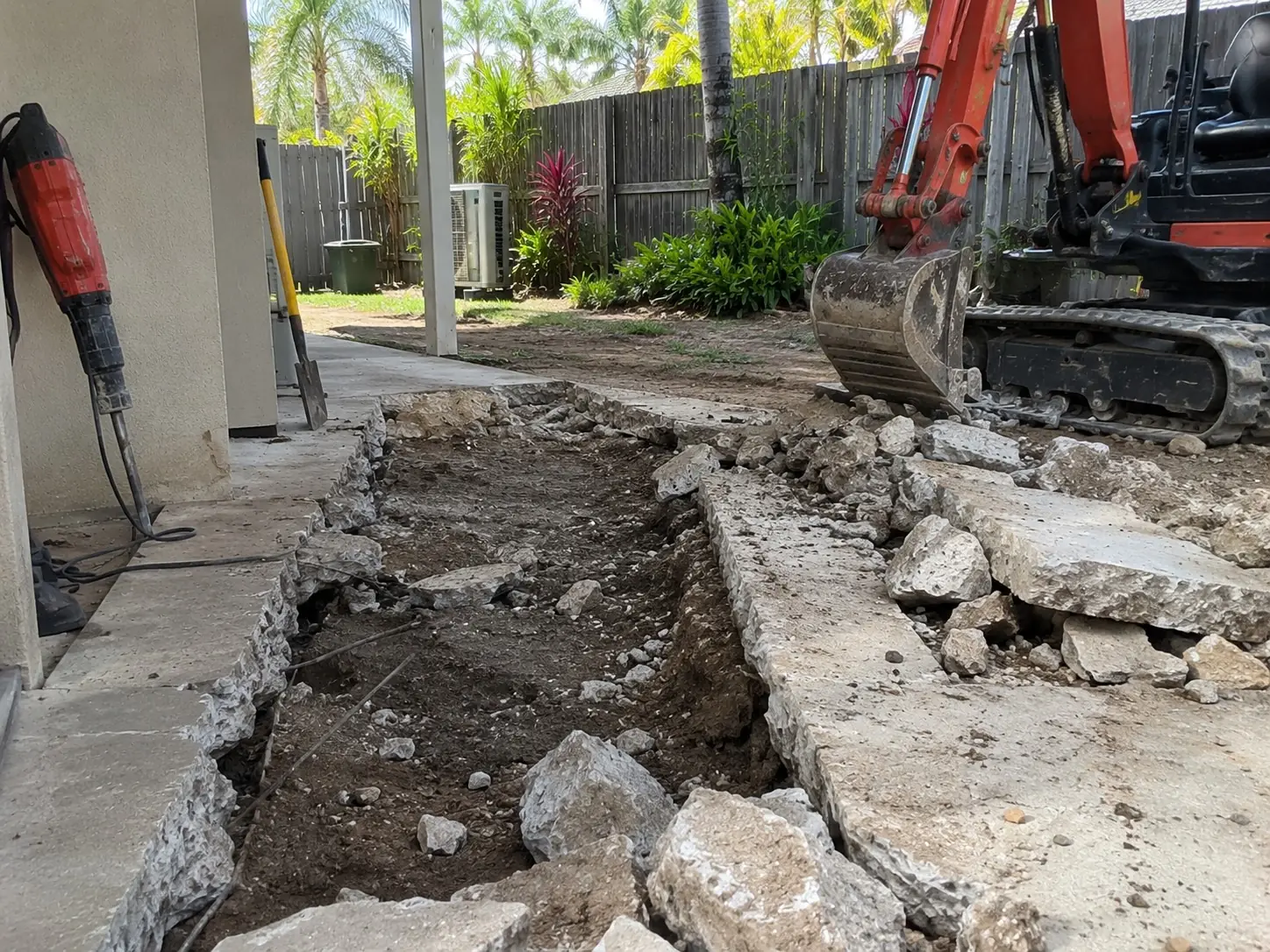
Narrow channels sawn through garage floors, laundries and driveways so plumbers can relocate drains, add a bathroom when building in under a Queenslander or run conduit to a new shed. Two parallel cuts and a careful break-out keep the trench tidy and quicker to backfill and patch.
Kerb Cuts for Crossovers
Cutting the kerb and channel or an existing footpath so a new driveway crossover can be built, with cut lines set out to the approved width. We also trim back old crossovers that are being moved or widened, leaving a straight edge for the concreters to form against.
Anti-Slip Grooving on Slopes
Shallow grooves sawn across steep driveways, ramps and pool surrounds so tyres and shoes hold better in wet conditions. It is a practical fix for a smooth slab that turns slippery under wet-season rain or a film of mould, without resurfacing the whole area.
Hire Concrete Cutting Contractors in Cairns: Three Easy First Steps
Need a doorway opened up, a trench for new plumbing or a section of slab removed? Good cutting starts with good information. Use any of these three ways to tell our Cairns operators about the job.
- Mark the cut lines: Spray or chalk where you want the cut, photograph it from a couple of angles, and send the pictures through to us.
- Send any services plans: If you have plumbing or electrical drawings, forward them so we know where pipes and cables are likely to run before we scan.
- Phone us with the depth: Call and tell us whether it is a driveway, wall or floor slab and roughly how thick, and we will talk through saw options.
Cutting inside an occupied home or busy shop needs care, so we discuss slurry control, noise times and access before we start. Older Cairns homes can hide unmapped pipes beneath the slab, which is why we scan first. Reach out today and we will put together your free quote.
What Sets Our Concrete Cutting Team Apart in Cairns
Joints Timed To The Pour
There is only a short window to saw a fresh slab. Go in early and the edges ravel; leave it late and the slab cracks on its own. Tropical heat shortens that window, so we watch how each pour is setting instead of working to a set clock.
Spacing Set To Slab Thickness
A joint that is cut shallow, or placed with big gaps between neighbours, lets cracks run wherever they like. We set depth and spacing to the slab's thickness and shape, so cracking is drawn into the joints rather than snaking through the middle of a panel.
Blades Matched To The Material
Hard river gravel, softer aggregate, heavy steel and fresh green concrete each call for a different diamond blade. Choosing the right one gives a cleaner edge with less chipping, and keeps the cut moving at a steady pace.
Faces Ready For The Next Pour
Where new concrete is to meet old, a jagged break leaves a weak, untidy join. We saw a straight, full-depth line so the new section has a firm, square face to butt against, and the finished seam looks intentional.
Equipment That Fits Tight Spots
Cairns has plenty of steep driveways, narrow side passages and homes built close to the boundary. Our compact saws and core rigs can be carried in where larger machines can't go, so the cut lands exactly where it is needed.
Joints Cleaned And Ready To Seal
After the control joints are sawn, we flush out the dust and fines so a flexible sealant or filler can be added if you want one. A sealed joint keeps grit, weeds and ants out and stops water getting under the slab.
Concrete Works in Cairns





Concrete Cutting FAQs
Practical answers about saw cutting in Cairns: when to cut control joints, how far apart they go, handling slurry and dust, and working through steel.
Generally on the day of the pour, often just a few hours after finishing, though the exact moment depends on the weather and how fast the slab is going off. Saw prematurely and the blade tears aggregate out of concrete that is still green, leaving ragged edges. Wait past the window and a random crack may have formed first, in a spot of the slab's own choosing. Cairns heat brings that moment forward, particularly on a hot, breezy afternoon, while a cloudy morning gives a little more time. Depth is just as important: a joint usually needs to go roughly one-quarter of the way into the slab's thickness, or it will not create the weak line that cracks follow.
A handy guide is to allow two to three metres between joints for every 100mm of slab thickness. A standard 100mm driveway slab therefore needs a joint at intervals of 2 to 3 m, and a 125mm slab can go a little further. Keep panels close to square, because long, skinny ones often split through their centre whatever joints surround them. Inside corners around steps, pits and posts concentrate stress, so they need a joint or extra steel. On reactive clay, layout matters even more, and if an engineer has set the spacing, the engineer's design comes first.
With some planning, both can be kept well in hand. Wet sawing feeds water to the blade, which cools it and keeps dust out of the air, but it creates a grey slurry that marks pavers, harms plants and must never be hosed into gutters or drains. We bund the work area, vacuum the slurry up and remove it from site to be disposed of correctly. Cutting dry means no slurry, but it produces fine silica dust, so it needs dust extraction on the saw and suitable respiratory protection. Indoors, beside garden beds or near a parked car, we pick whichever method keeps things cleanest there and explain beforehand what you can expect.
No. A diamond blade slices through rebar and mesh along with the concrete, so steel does not prevent a cut. It does slow progress and wears blades faster, which affects the price, so tell us early if you know how much steel the slab contains. With structural elements, the bigger question is whether a cut is safe, not whether it is possible. Taking a section out of a suspended slab, beam or load-bearing wall can change how the building carries its weight, and may need sign-off from an engineer or certifier first. Where that looks likely, we raise it at quoting rather than on the day.
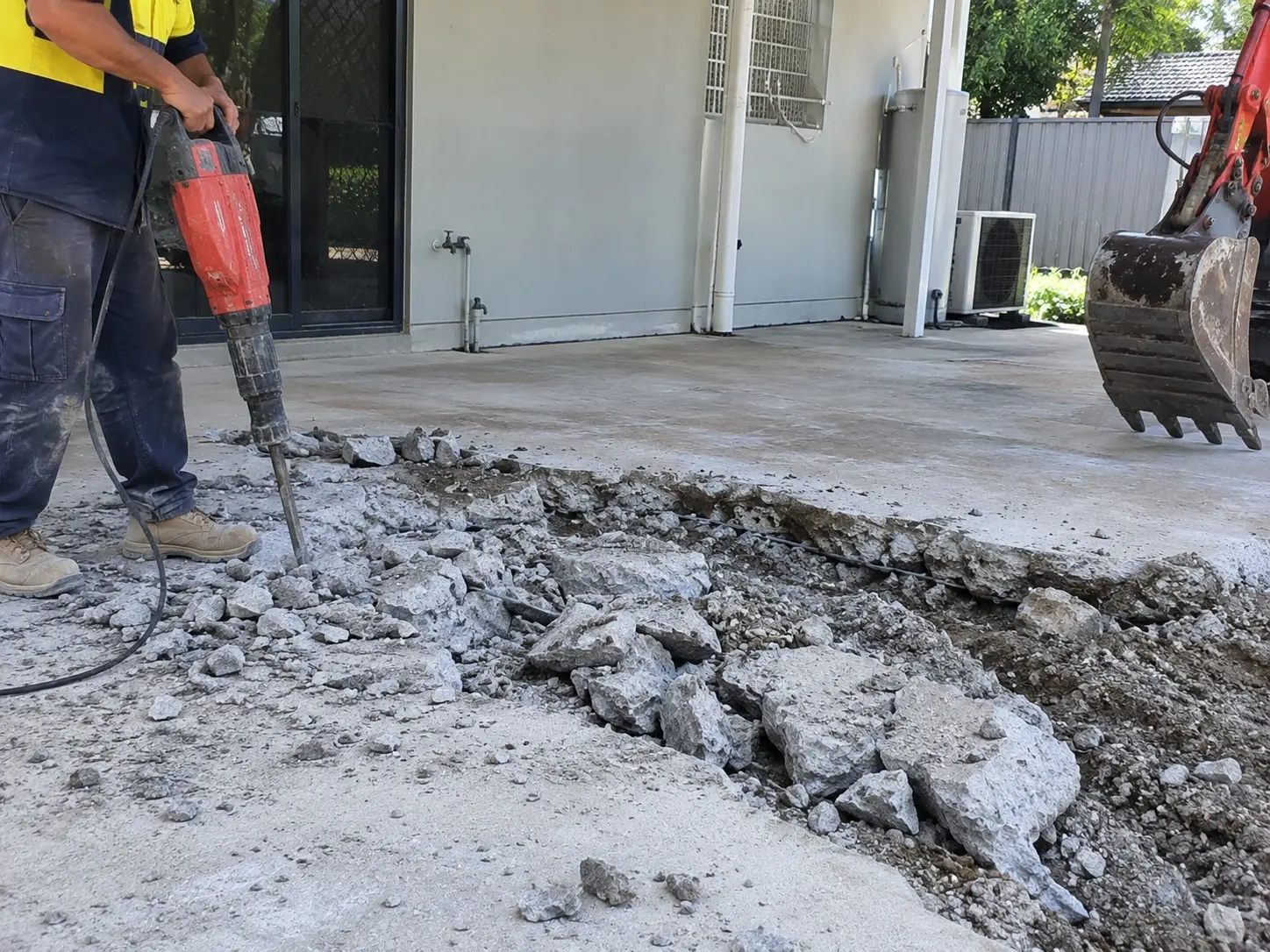
Yes. Coring gives a clean, round hole at the exact size required, without the cracking and chipped edges that come from breaking through with a hammer drill or jackhammer. Common jobs include plumbing and stormwater penetrations, electrical and data conduit, balustrade and pool fence posts, and holes for structural anchors. We can core through floors and walls in many hole sizes. First we locate steel, pipes and cables hidden in the concrete, from drawings or a scan where it is warranted, so nothing unexpected turns up mid-hole. The finished hole is ready for the plumber or electrician to seal around.
Other services you might need
Need a clean cut through concrete?
Let us know where the cut goes and roughly how thick the concrete is, and we can book a visit.